
Share Donald Cullinan Dowling's obituary with others.
Invite friends and family to read the obituary and add memories.
Stay updated
We'll notify you when service details or new memories are added.
You're now following this obituary
We'll email you when there are updates.
Select your format and elements to print

IN LOVING MEMORY OF Donald Cullinan Dowling
Donald Cullinan
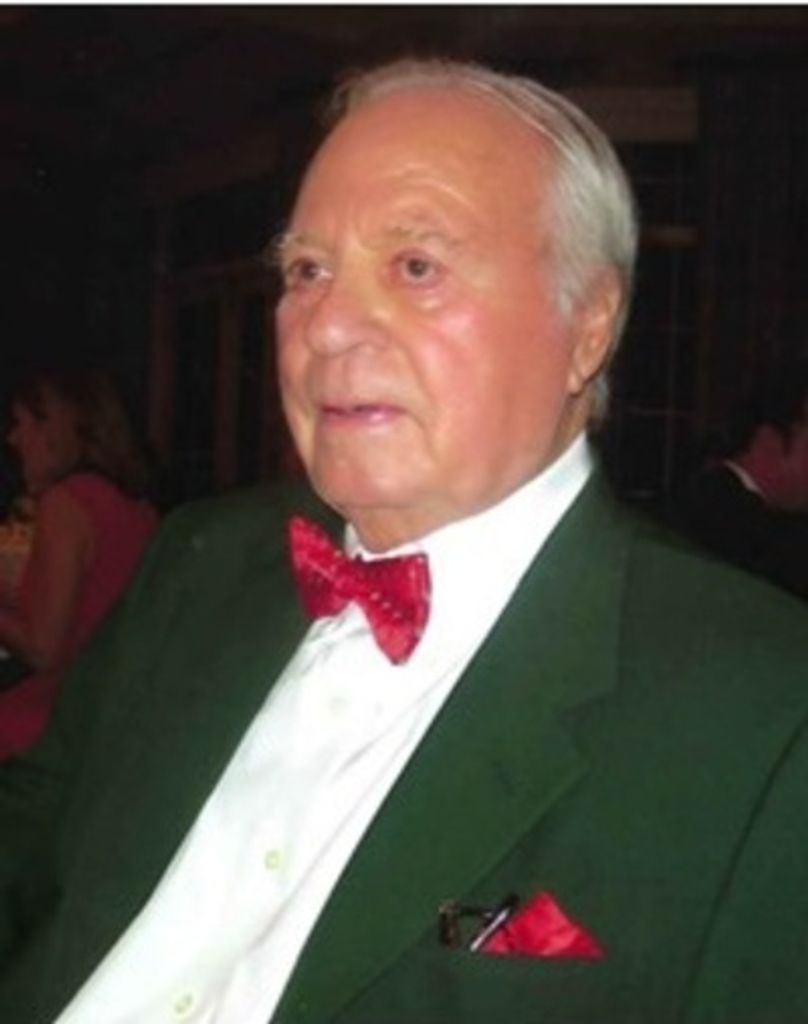
Dowling
Oct 16, 1936 — Apr 12, 2020
Village of Golf
Donald Cullinan Dowling's Obituary
Donald C. Dowling, accomplished attorney, loving husband, adoring father and grandfather, and trusted friend died at home, of natural causes, on April 12th at age 83.
Donald was a man of many passions: his work, his interests and his family. Donald was a lawyer whose distinguished criminal and civil career and practice spanned 52 years, multiple U.S. states, and three countries. A lawyer's lawyer, Donald was a fierce advocate for those he represented, and for society's disadvantaged.
Donald was born on October 16, 1936 in Chicago, Illinois. He received his formal education at Oak Park and River Forest (IL) High School, Brown University (BA,'58), Oxford University (course on the complete works of Shakespeare), the University of Oviedo, Spain (advanced fellowship studies) and the University of Chicago Law School (JD, '61).
Prior to graduating from law school, he worked as an assistant to the "Special Prosecutor" who had been appointed to investigate and then prosecute vote fraud in Cook County following the 1960 Presidential Election (Kennedy/Nixon). His work continued beyond his graduation and ultimately resulted in numbers of convictions. In late 1961, he was appointed a Field Research Associate of the American Bar Foundation ("ABF") to study law and procedures concerning the commitment and discharge of the mentally ill. In that capacity he spent time in numbers of states collecting data which eventually resulted in the publication of a study which affected changes in the law in that field and influenced the direction that the insanity defense in criminal cases would take. Upon completion of his work at the ABF, he returned to Chicago and entered the private practice of law, specializing in trial work. He eventually left private practice in order to accept an appointment as the National Defender Fellow at the University of Chicago Law School. Following that fellowship, he was awarded a stipend from the Calouse Gulbenkian Foundation which permitted him to move to Lisbon, Portugal where he worked on aspects of the Portuguese penal code. Upon returning to the United States, he moved to New York City (working for a number of years at GTE International, practicing in the US and parts of Canada). He returned to Chicago to work with Metropolitan Structures on the development of the air rights above railroad properties; upon which many major buildings were built in the City's downtown area. At the conclusion of his work on that project he "hung out a shingle" in St. Charles, Illinois, for starting his own law firm focusing on criminal and civil trial work.
One of Donald's articles ("Escobedo and Beyond: The Need for a Fourteenth Amendment Code of Criminal Procedure"), published in 1965 in Northwestern University's "Journal of Criminal Law and Criminology", was cited as "scholarly" by Chief Justice Earl Warren of the Supreme Court of the United States in the landmark decision Miranda v. Arizona , the famous case specifying actions the police must follow in order to get a defendant's statement or confession into evidence.
At age 43, Donald moved his family to Florida where he practiced law for another 33 years. He served as Chief Trial Attorney and Head of the Capital Division in the Office of the Public Defender in Palm Beach County, Florida (1980-82), where he tried many capital murder cases. He was the first attorney in Palm Beach County to receive a verdict of Not Guilty by Reason of Insanity in a capital first degree murder case. Donald then started his own civil and criminal practice and then later became a named partner in the firm later known as Spinner, Dittman, Federspiel & Dowling in Delray Beach, Florida.
Donald was an inspiration and a mentor to younger lawyers. He was a brilliant tactician and innovative in his trial practice. His eloquent booming voice exuded credibility and compassion for his clients during trial.
Donald's wit, sense of humor, joie de vivre , leadership, kindness, humility and good counsel will be missed by all whose lives he touched. Donald's thirst for knowledge and passion for new endeavors was inspiring – whether it was writing a screenplay, owning a fishing boat, pursuing advanced studies in divinity,learning how to care for orchids, learning a new language or studying up on one of his role models, Abe Lincoln.
Donald is survived by his loving wife Andrée Marie-Thérèse Dowling; his children, Donald C. Dowling, Jr. (Nancy), Eric M. Dowling (Isabel) and Luc M. Dowling (Daisy); his grandchildren Grant, Grace, Gabriela, Pascale and Marguerite Dowling; his brothers, Owen (the late Ginny, Anne) and Kevin (Marty) Dowling; his sister, Diane (the late Philip) O'Donnell and many cousins, nephews and nieces. Donald was predeceased by his father Robert E. Dowling; his mother Helen M. Dowling (mother of seven children, who passed in her 100th year); and brothers Robert, Brian and Terrence Dowling.
In lieu of flowers, donations in memory of Donald may be made to Brown University.
A service will be held at a later date.
Donald Cullinan Dowling's Guestbook
Visits: 40
This site is protected by reCAPTCHA and the
Google Privacy Policy and Terms of Service apply.
Service map data © OpenStreetMap contributors